Navigating Atlanta's Building Codes: What You Need to Know About Handrail Installations
August 15, 2024
As a leading provider of custom handrail solutions in the Atlanta metro area, the team at Atlanta Railing Pros
understands the importance of ensuring our installations comply with the city's strict building code requirements. Proper adherence to local safety regulations is essential for protecting the wellbeing of residents and visitors alike.
In this post, we'll dive into the key Atlanta building code standards for handrail height, gripping surfaces, strength, continuity, and more. By understanding these guidelines, homeowners, business owners, and property managers can work with our team to design and install a handrail system that not only enhances the aesthetics and accessibility of their property, but also meets the safety benchmarks set forth by the City of Atlanta.
Handrail Height
According to the Atlanta building code, handrails must be installed between 34 and 38 inches above the surface of the stair treads or ramp. This height range is intended to provide comfortable and accessible gripping for users of all ages and statures. Our team carefully measures each project site to guarantee the final handrail placement falls within this specified zone.
Handrail Gripping Surface
The Atlanta building code has detailed requirements when it comes to the gripping surface of a handrail. The surface must be continuous, without interruption by newel posts or other obstructions. It must also feature a circular cross-section with an outside diameter between 1.25 and 2 inches - the ideal range for a secure, comfortable grip. Furthermore, there must be at least 1.5 inches of clearance between the handrail and any adjacent wall or surface.
Handrail Strength
Safety is paramount for any handrail installation, which is why the Atlanta building code has stringent strength requirements. Handrails must be able to withstand a concentrated load of 200 pounds applied in any direction at any point along the top of the rail. They must also be able to support a distributed load of 50 pounds per linear foot, also applied in any direction. Our team utilizes heavy-duty mounting hardware and specialized installation techniques to ensure every handrail meets or exceeds these strength standards.
Handrail Continuity
Continuous, uninterrupted handrails are essential for safe navigation, especially on stairs and ramps. The Atlanta code requires that handrails run the full length of the stairs or ramp, from the top riser to the bottom riser. They must also return to the wall, guard, or floor at each end, or terminate in a newel post. This seamless design helps users maintain a secure grip and consistent support as they ascend or descend.
Additional Requirements
Beyond the core elements above, the Atlanta building code has some additional handrail guidelines that our team closely follows:
Handrails are required on at least one side of enclosed stairways with 4 or more risers.
Ramps with a slope greater than 1:20 must have handrails on both sides.
Handrails cannot project more than 4.5 inches into the required width of a stairway.
Adhering to these detailed code requirements is essential for ensuring the safety and longevity of any handrail installation. At Atlanta Railing Pros, we make it a priority to stay up-to-date on the latest local regulations and work closely with building inspectors to guarantee full compliance.
When you partner with our team, you can have complete confidence that your new handrail system will not only elevate the look and accessibility of your property, but also meet the strict safety standards put in place by the City of Atlanta. Contact us today to learn more about our custom handrail solutions and how we can help you navigate the building code requirements.
You might also like
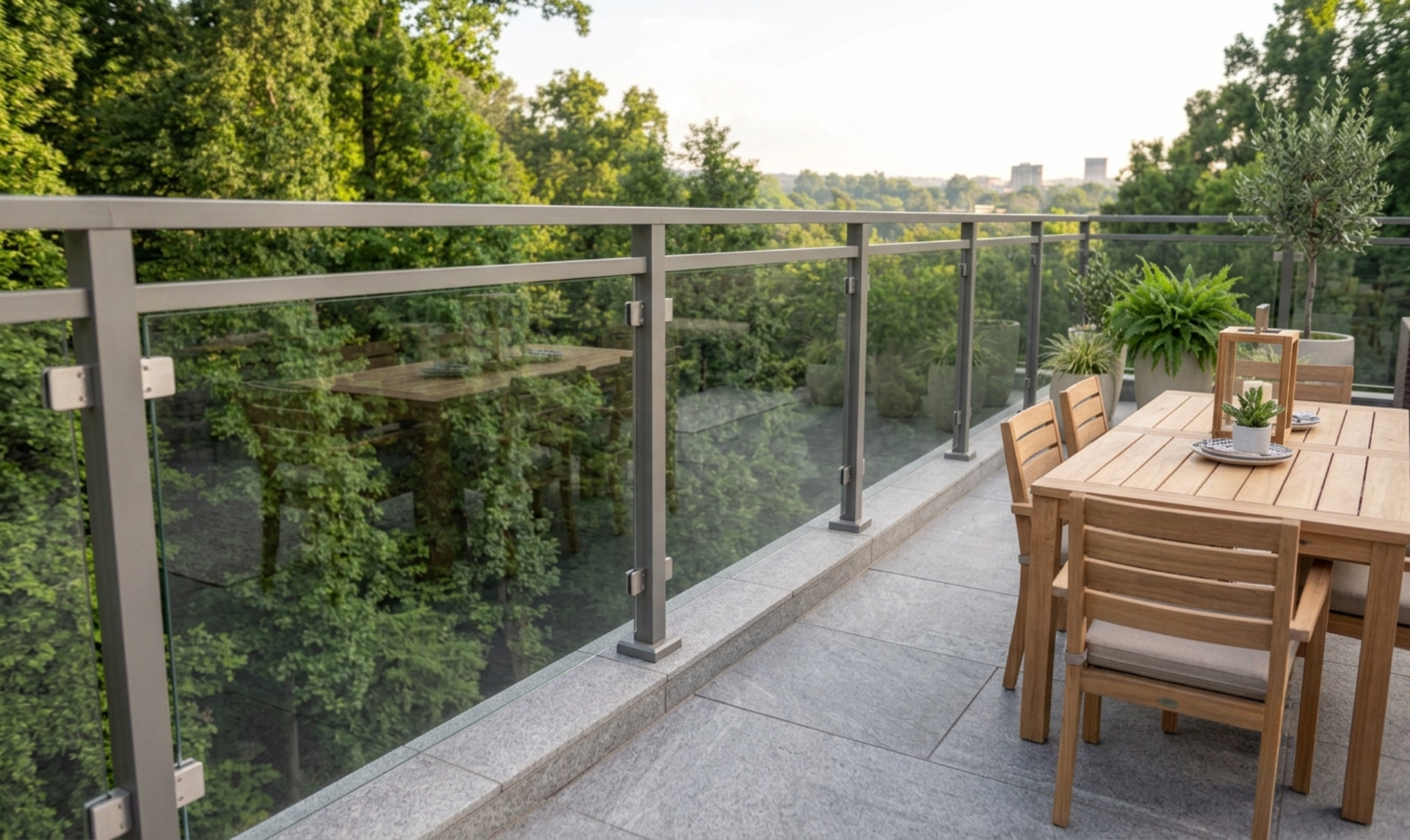
If we had to pick one project that accounts for more of our residential work than anything else, it's front-step handrails. It makes sense — most Atlanta homes have at least a few steps leading to the front door, and Georgia code requires a handrail on any stairway with four or more risers. Here's what to expect if you're thinking about adding or replacing a front-step railing. Why Homeowners Call Us The most common reasons we hear: The existing railing is rusted, loose, or damaged. Atlanta's humidity takes a toll on iron railings over time, especially at the base where they meet concrete. There's no railing at all and one is needed — either for safety, for aging family members, or because a home inspection flagged it. The homeowner is selling and wants to improve curb appeal before listing. The existing railing is outdated and doesn't match the home anymore. Design Options Most front-step railings are wrought iron, but we also install stainless steel and aluminum depending on the home's style. For a traditional brick home, a simple iron handrail with a clean profile is usually the best fit. For a more contemporary home, stainless steel or a flat-bar iron design might be more appropriate. We bring design samples to every on-site estimate so you can see finish options and styles in person. What It Costs Front-step handrails are one of the more affordable railing projects. A basic single-side handrail for 3–5 steps typically falls in the $500 to $1,200 range installed, depending on the material and design. A double-sided railing (rails on both sides of the steps) or a longer run of stairs will be on the higher end. We provide detailed written estimates so you know the exact cost before any work begins. Timeline Most front-step handrails can be measured, fabricated, and installed within 7–10 business days from approval. The installation itself usually takes a few hours. Code Requirements Georgia requires a graspable handrail between 34 and 38 inches above the stair nosing on any stairway with four or more risers. The handrail must extend at least 12 inches beyond the top riser. We build every handrail to current code standards. Getting Started Call us at (404) 410-6030 or fill out our online form. We'll schedule an on-site visit, take measurements, talk through your options, and have a written quote to you within 48 hours.
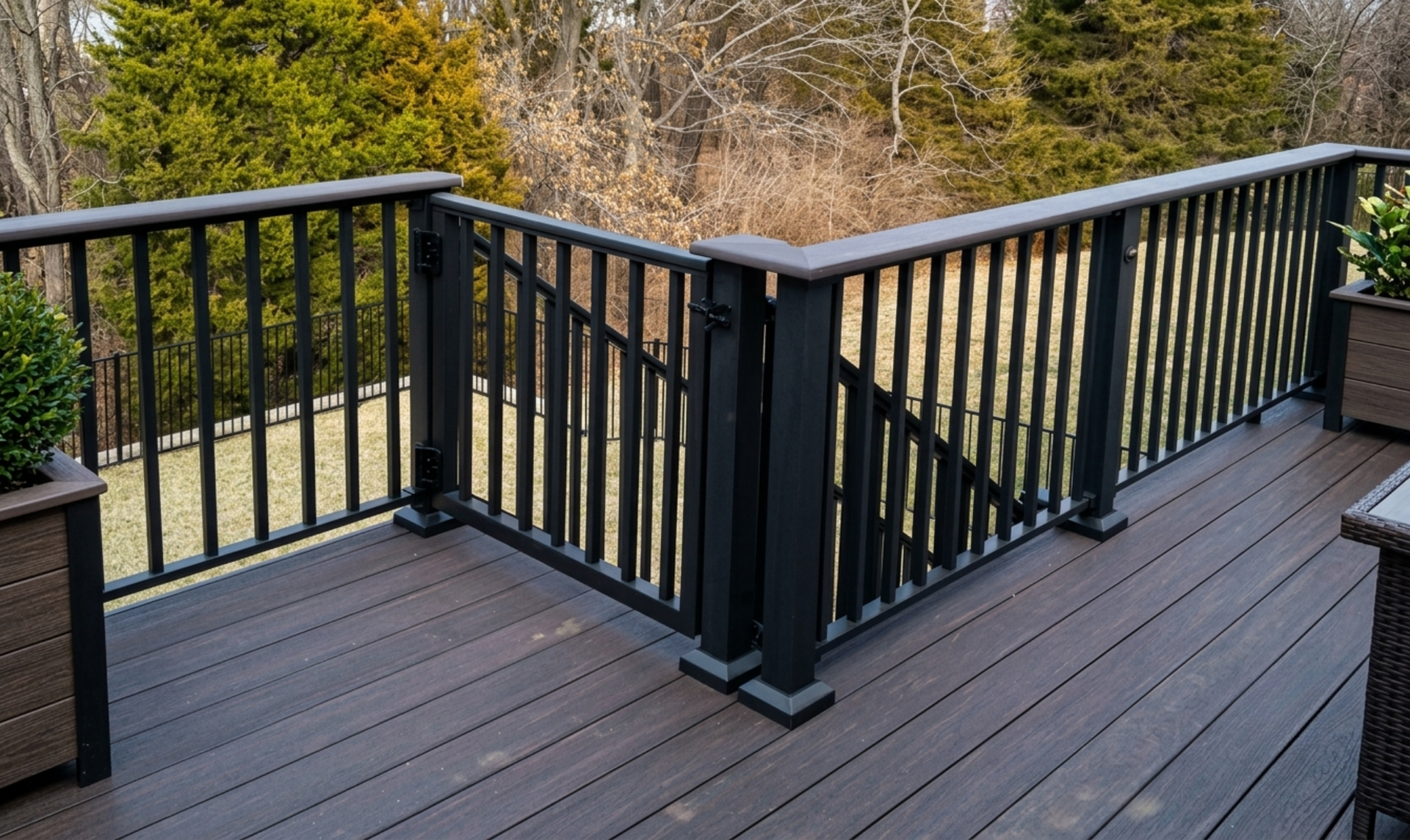
Rusty, wobbly, or outdated? Here are 5 signs it's time to repair or replace your iron railing. From Atlanta Railing Pros.
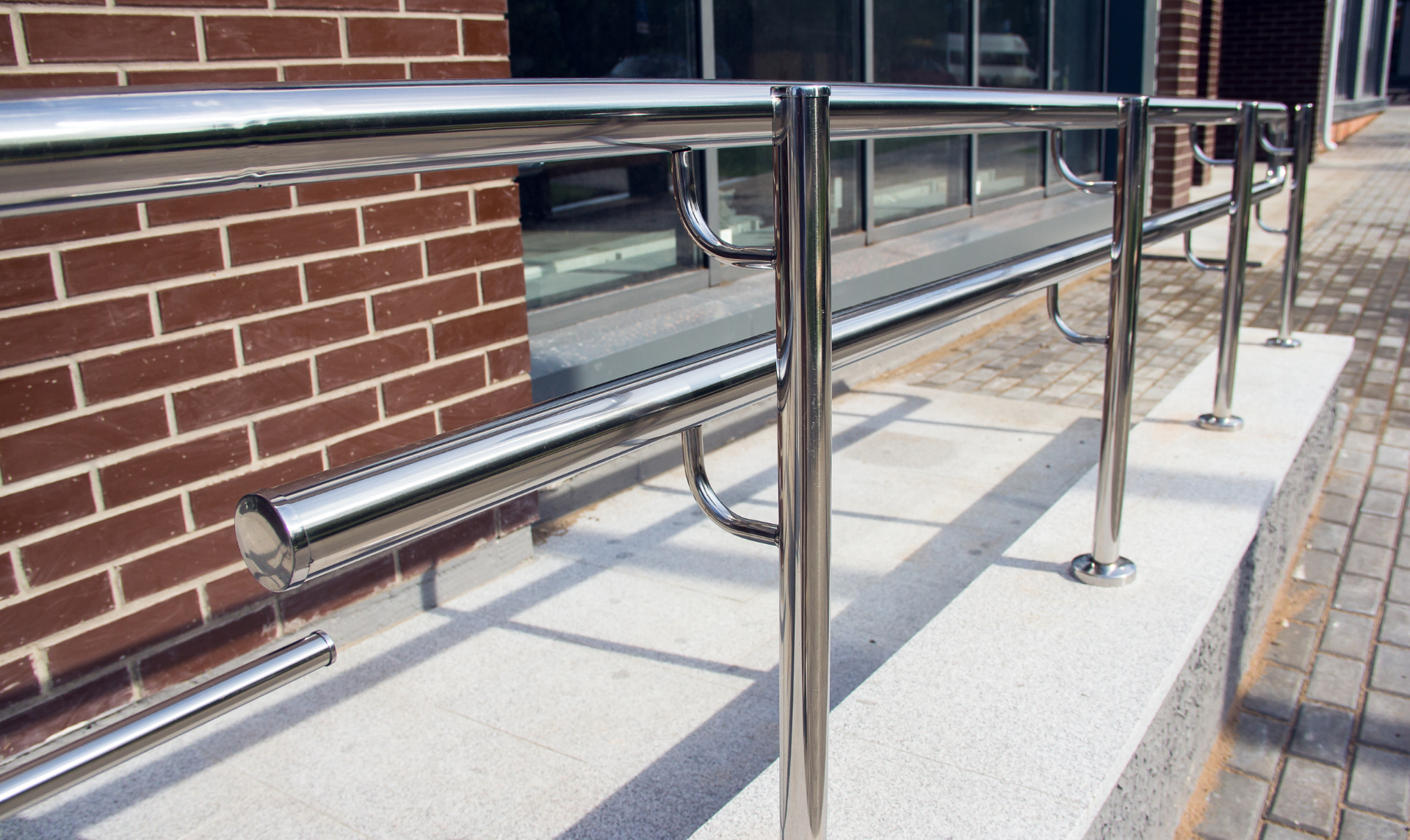
Before you install or replace a railing on your Atlanta home, it helps to know the basic code requirements. Georgia follows the International Residential Code (IRC) for single-family homes, and the City of Atlanta and surrounding counties enforce these standards through their building departments. Here's what you need to know. When Is a Railing Required? Georgia code requires a guardrail on any elevated surface — including decks, balconies, porches, and landings — that is more than 30 inches above grade. If your deck is higher than about two and a half feet off the ground, it needs a railing. Handrails are required on any stairway with four or more risers. That includes exterior front steps, back deck stairs, and interior staircases. Height Requirements Guardrails (the protective barrier on a deck or balcony) must be at least 36 inches tall for residential applications and 42 inches for commercial. Handrails (the graspable rail you hold onto going up or down stairs) must be between 34 and 38 inches above the stair nosing. Baluster Spacing The openings between balusters (the vertical bars in a railing) cannot allow a 4-inch sphere to pass through. This is a child safety requirement — the gap has to be small enough that a young child can't fit their head through. This is one of the most common code violations we see on older railings. If your railing's baluster spacing is wider than 4 inches, it's not up to current code. Graspability Handrails must be graspable, meaning you can wrap your hand around them. For round handrails, the diameter must be between 1.25 and 2 inches. Flat-topped deck rails that are 3–4 inches wide don't meet the graspability requirement on their own — they need a separate graspable handrail mounted on top or alongside. Do You Need a Permit? For most railing replacement projects on existing residential properties in Metro Atlanta, a permit is not required. However, if you're adding a railing as part of new construction, an addition, or a major deck build, a permit is typically needed. Code enforcement varies by jurisdiction — the City of Atlanta, Fulton County, DeKalb County, Cobb County, and Gwinnett County each have their own building departments and processes. We'll let you know during the estimate if your project is likely to need one. What This Means for Your Project If you're replacing an existing railing, the new one needs to meet current code even if the old one didn't. We build everything to current standards so you don't have to worry about compliance. Questions about whether your railing is up to code? Call us at (404) 410-6030 — we're happy to take a look and give you an honest assessment.